
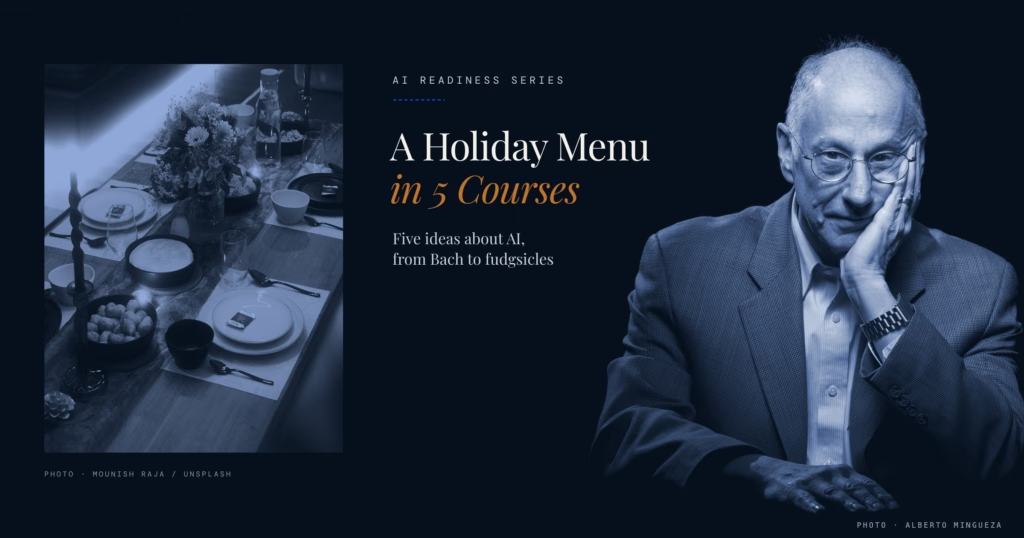
Part of the AI Readiness series
Pull up a chair. The holidays are here: lights going up, something warm on the stove, and even in the fullest weeks, a few moments to slow down with the people around you.
It’s a season for gratitude, and for celebrating the people who worked side by side with you all year. And if you’re racking your brain for icebreakers for this year’s holiday gathering, we’ve got you. Here’s a conversation to bring to your table.
It’s a conversation on AI, but don’t let that scare you off. It comes from philosopher David Weinberger, who explains AI the way you’d tell a story at dinner: with Bach, a bad joke, an old telephone switchboard, a house for sale, and a frozen dessert he has very strong feelings about.
We’ve set them out like a family meal. Five courses, each with a short clip, a little game, and a question to pass around.
How to serve it: Gather your people. Play a clip (2-3 minutes), play the game, and pass the question around. No wrong answers, no homework. Serve one course over lunch, or the whole meal at your holiday get-together. A printable menu and place cards are included.
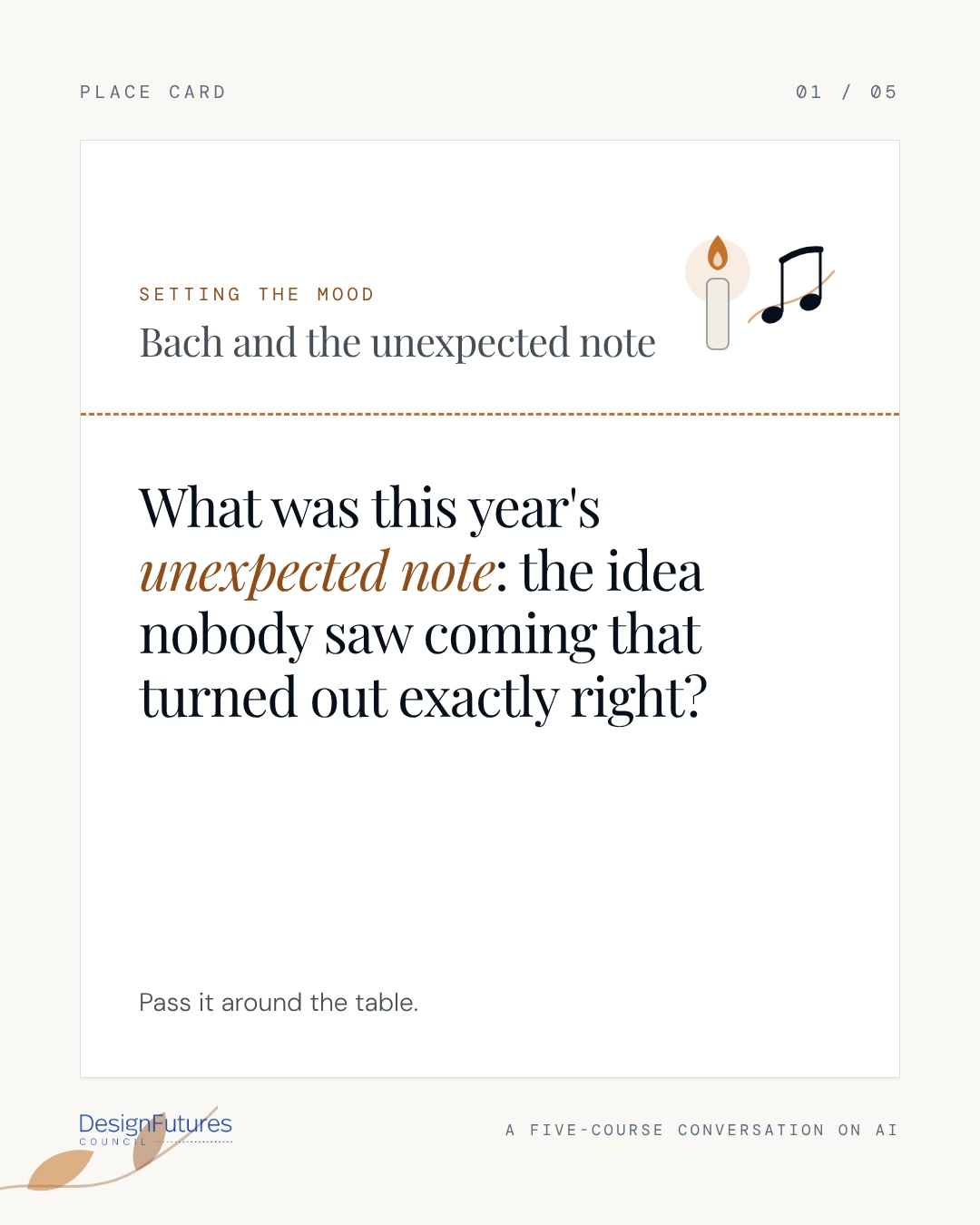
01 / 05 · Setting the mood
Bach and the unexpected note
Every good gathering starts with music. Put on some Bach, turn it down just low enough to talk over, and let the room settle in. Here’s an hour of it: Brandenburg Concertos, violin concertos, and the Cello Suite No. 1 Prelude for the quieter moments.
The story: Long before AI, someone tried to bottle Bach in formulas. The result, in David’s words, was “so boring.” Today’s AI learns from everything Bach actually wrote and does far better. As good as Bach himself? David calls that debatable, and we’d bet on Bach. What we love is still the note nobody saw coming that sounds exactly right.
Chew on this: Every family has its recipes, and every firm has its secret sauce. The best ones still leave room for a little surprise.
Table game: Napkin tables. Take 30 seconds to sketch a dining table nobody would expect but everyone would love to gather around. Stick figures welcome. Optional round two: bring AI to the table. Ask an image tool for one too, reveal it right there, and vote on which surprise feels right.
Pass the question
What was this year’s unexpected note: the idea nobody saw coming that turned out exactly right?
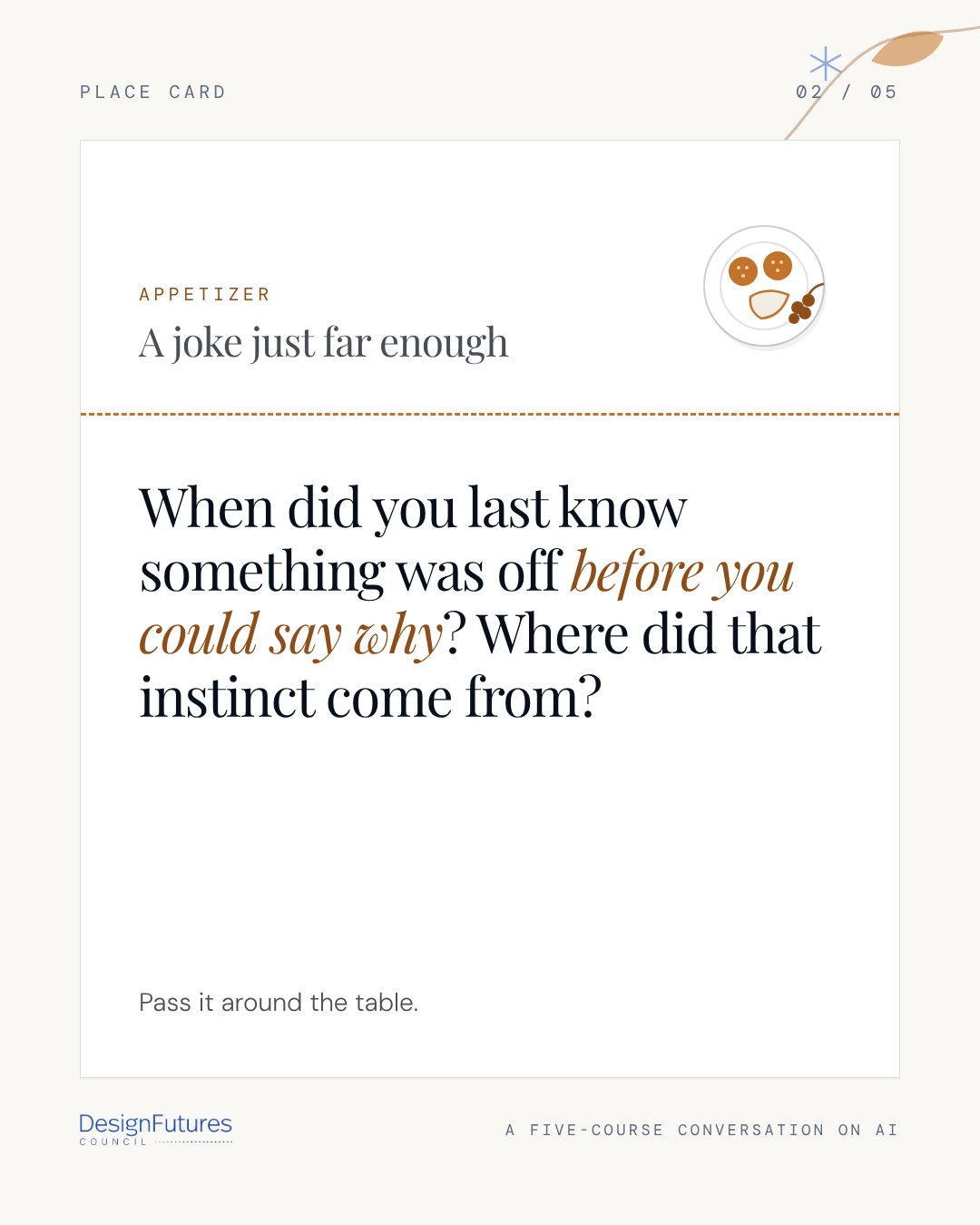
02 / 05 · Appetizer
A joke just far enough
The story: Every joke is about distance. Too far from the setup: “I don’t get it.” Too close: “a pretty good bad joke.” Get it “just far enough” and the whole table laughs before anyone has time to think. AI will never feel that laugh, and David notes that kind of gut sense matters even more when the stakes are a building.
Chew on this: The same gut feeling that tells you a joke landed tells you when a drawing is a little off. It grows over years, from mentors, colleagues, and clients, from intuition, and from simply living in the world: walking through rooms, sitting in chairs, noticing when a space feels good.
Table game: Worst joke wins. Everyone tells their best (or worst) dad joke. Biggest groan takes the round, plus bragging rights until next year.
Pass the question
When did you last know something was off before you could say why? Where did that instinct come from?
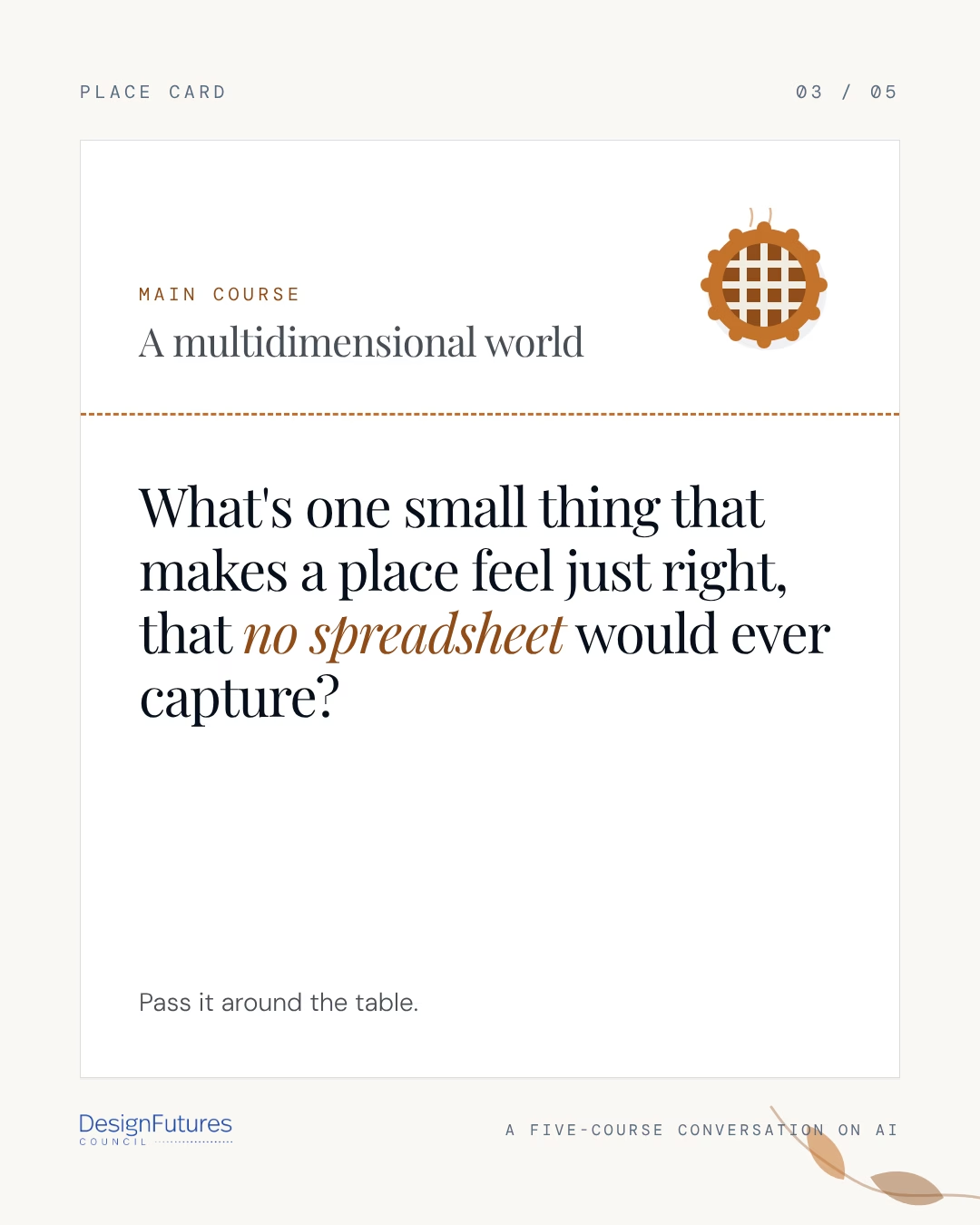
03 / 05 · Main course
A multidimensional world
The story: Picture selling a house you love. Bedrooms, bathrooms, schools: AI can weigh twenty factors at once. Then come the subtler ones, like where the garage sits, whether there are moths, or whether a buyer saw the neighbors and didn’t like “the cut of their jib.” As David puts it, “this is not a feature of machine learning, it’s actually a feature of life.”
Chew on this: Some of what makes a place feel right does fit on a spreadsheet. Most of it doesn’t. A home, a studio, a building people love is made of countless small things working together, and no list of numbers can hold them all. That’s the joy of this work, and the part worth protecting.
Table game: Home sweet home. Everyone shares one odd, specific thing they loved about a place they once lived. The squeaky stair. The window seat. The neighbor’s dog.
Pass the question
What’s one small thing that makes a place feel just right, that no spreadsheet would ever capture?
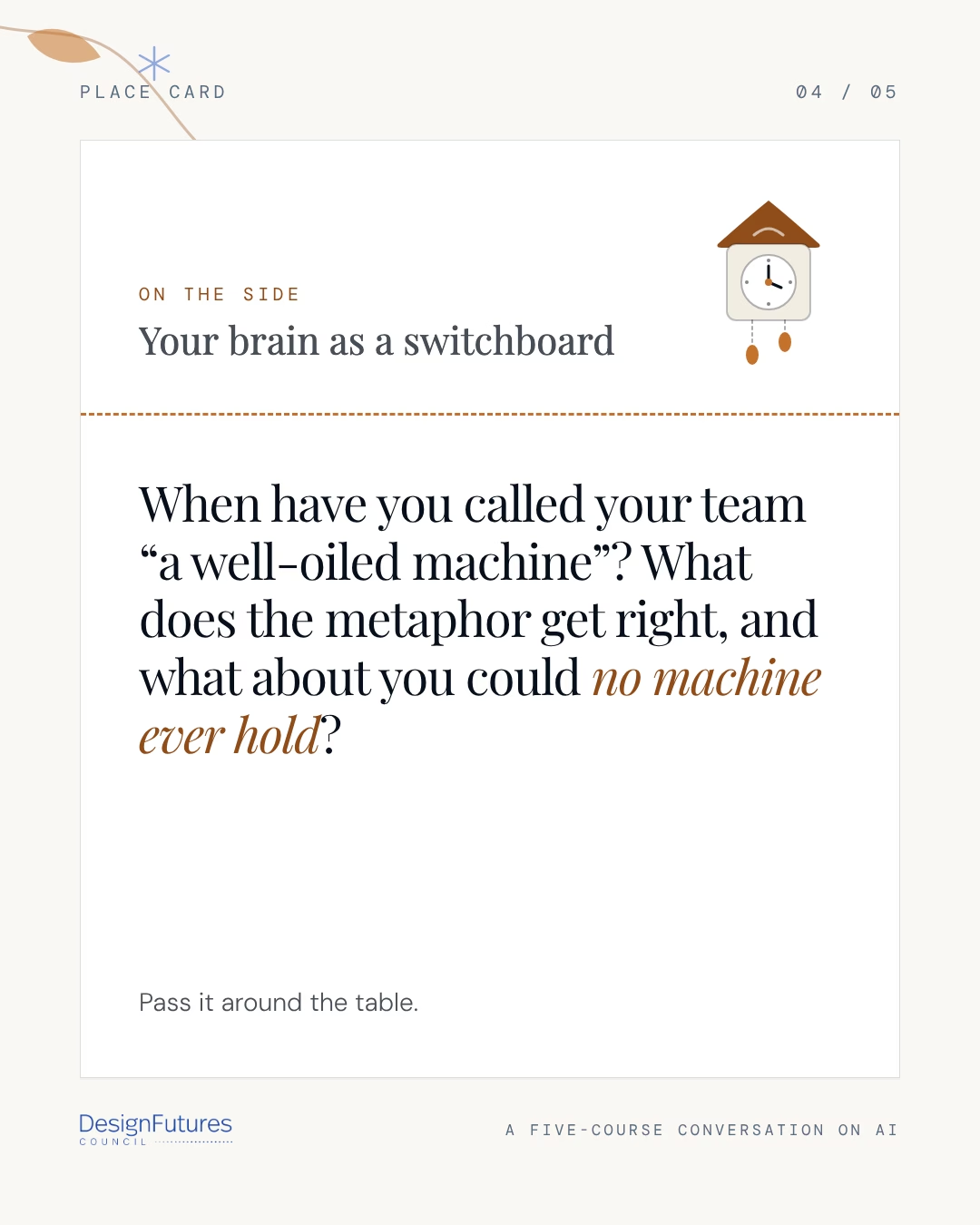
04 / 05 · On the side
Your brain as a switchboard
The story: Every era explains us with its most impressive machine. Clockwork gave us a clockwork universe, switchboards a switchboard brain, computers a world of “information.” Now it’s AI’s turn, and David asks what it will lead us to think we are.
Chew on this: People aren’t machines, and neither are the teams they make. It’s worth noticing which metaphors we let in the door.
Table game: Guess the machine. Pick the machine your team most resembles, a cuckoo clock, a popcorn maker, an office printer on a Monday, and give the table three clues without naming it. Brave souls can just make its sound. Everyone else guesses.
Pass the question
When have you called your team “a well-oiled machine”? What does the metaphor get right, and what about you could no machine ever hold?
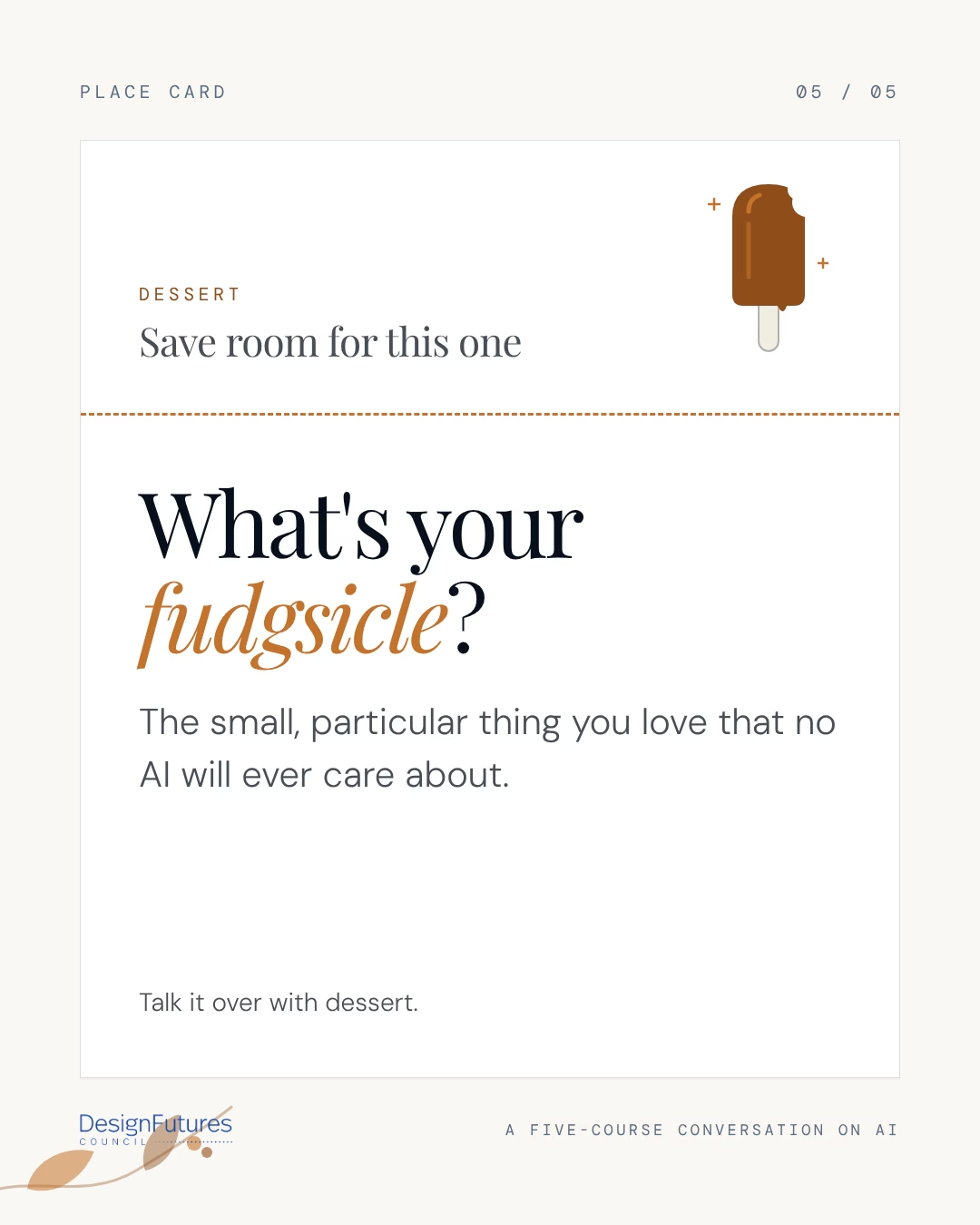
05 / 05 · Dessert
What’s your fudgsicle?
In the middle of a serious point about why AI will never truly care about anything, David lists the things that matter to people: “Stupid things, big things, grandchildren, fudgsicles, the whole range.” Then: “Don’t get me started on fudgsicles.” Mike: “Now I have to.”
It’s the sweetest moment of the conversation, and maybe the wisest. Things matter to us. Little things, big things, people. AI can act as if it cares, but you can unplug it and it won’t mind one bit.
Think about the holiday table you grew up around. The dish someone makes every year that no recipe online can match. The cookies only one person gets right. The chipped serving plate nobody would dream of replacing. The seat everyone knows is taken. None of it is the most efficient choice. All of it is home.
That’s the part of us AI will never have. It’s also what good design has always been about: knowing what matters to people, and why.
Pass the question
What’s your fudgsicle? The small, particular thing you love that no AI will ever care about. Talk it over with dessert.
Pass the plate: food for thought
The best meals end with someone saying, “Take some home.” So take this one with you, share it with your people, and then tell us how it went: the warmest answer, the best dad joke, the machine your team turned out to be, and of course, your fudgsicle.
In case you noticed, these were AI readiness questions in disguise: what’s formula and what’s judgment, what fits on a spreadsheet and what doesn’t, and what only people can care about.
Want the whole conversation? Watch the full interview, along with our guide to David’s seven big ideas.
For your table
The printable menu and place cards
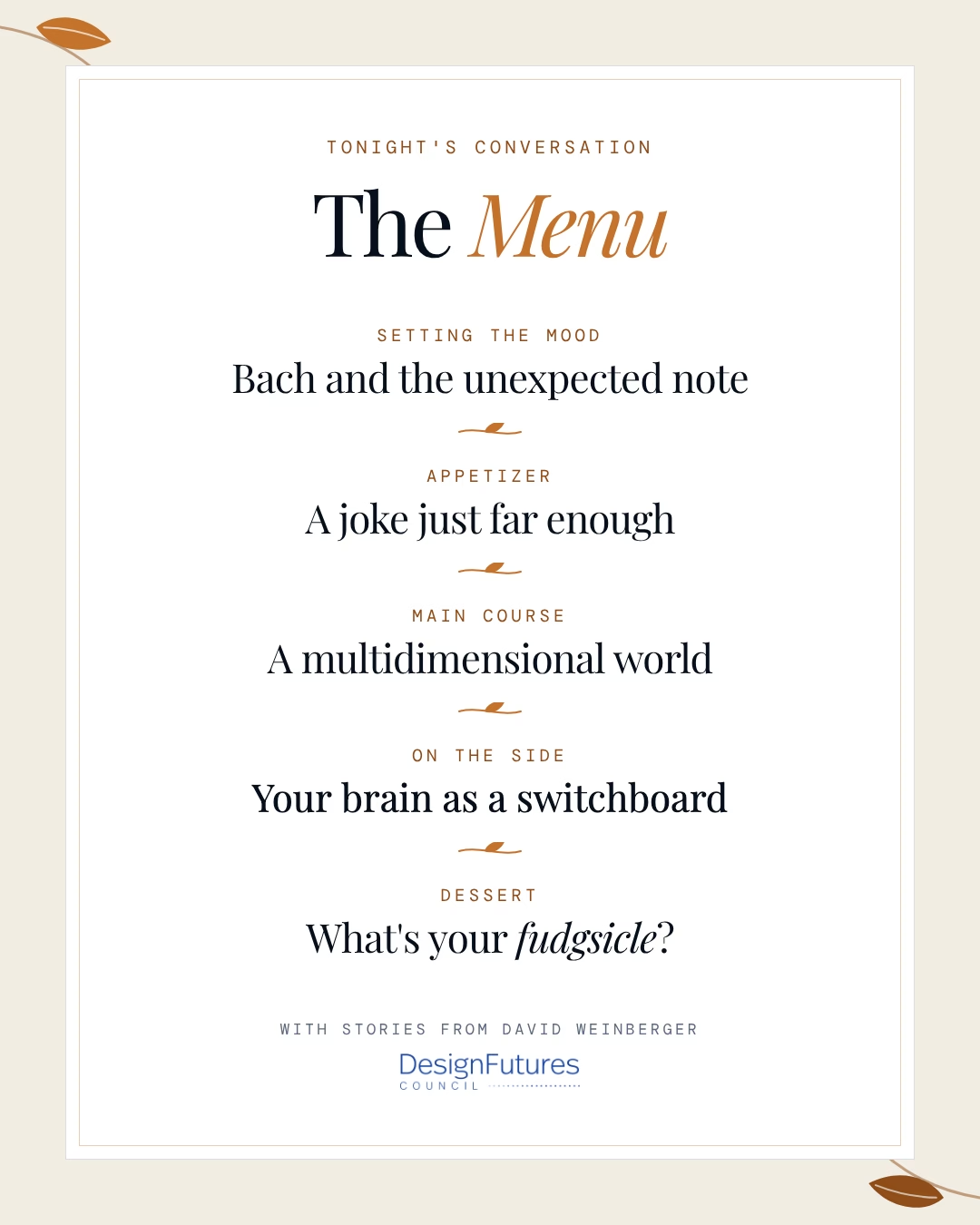
One menu and five place cards, one for each course, plus a cover and a closing card. Click any card to enlarge it, or download all eight as a PDF.
From all of us at the Design Futures Council: thank you for a year of good conversations. Happy holidays.
Subscribe to get our latest stories delivered to your inbox.